एक नजरमा
- Period
- 250 BCE to present
- Enshrines
- Marker Stone & Nativity Sculpture
- Structure
- 15 brick chambers, 5×3 grid
- Earliest phase
- 3rd c. BCE, over an older shrine
- Present temple
- Rebuilt by LDT, 2003
- Access
- Interior restricted
कथा
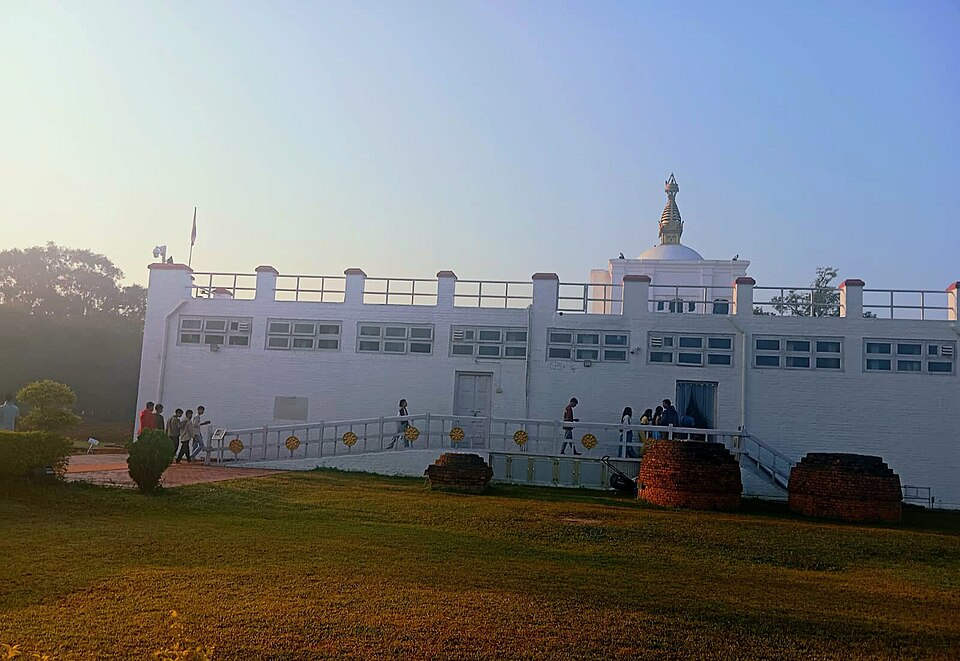
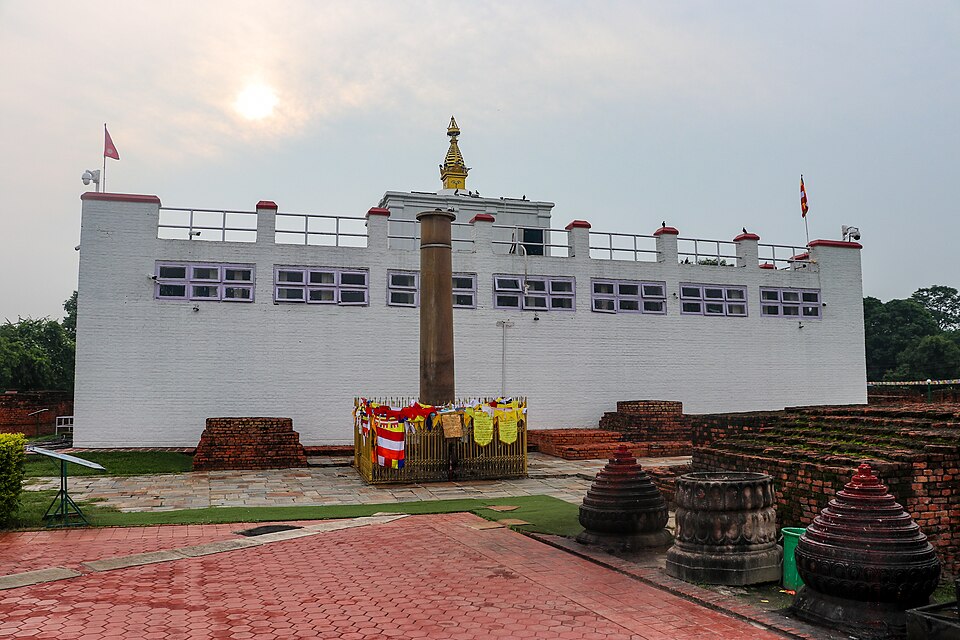
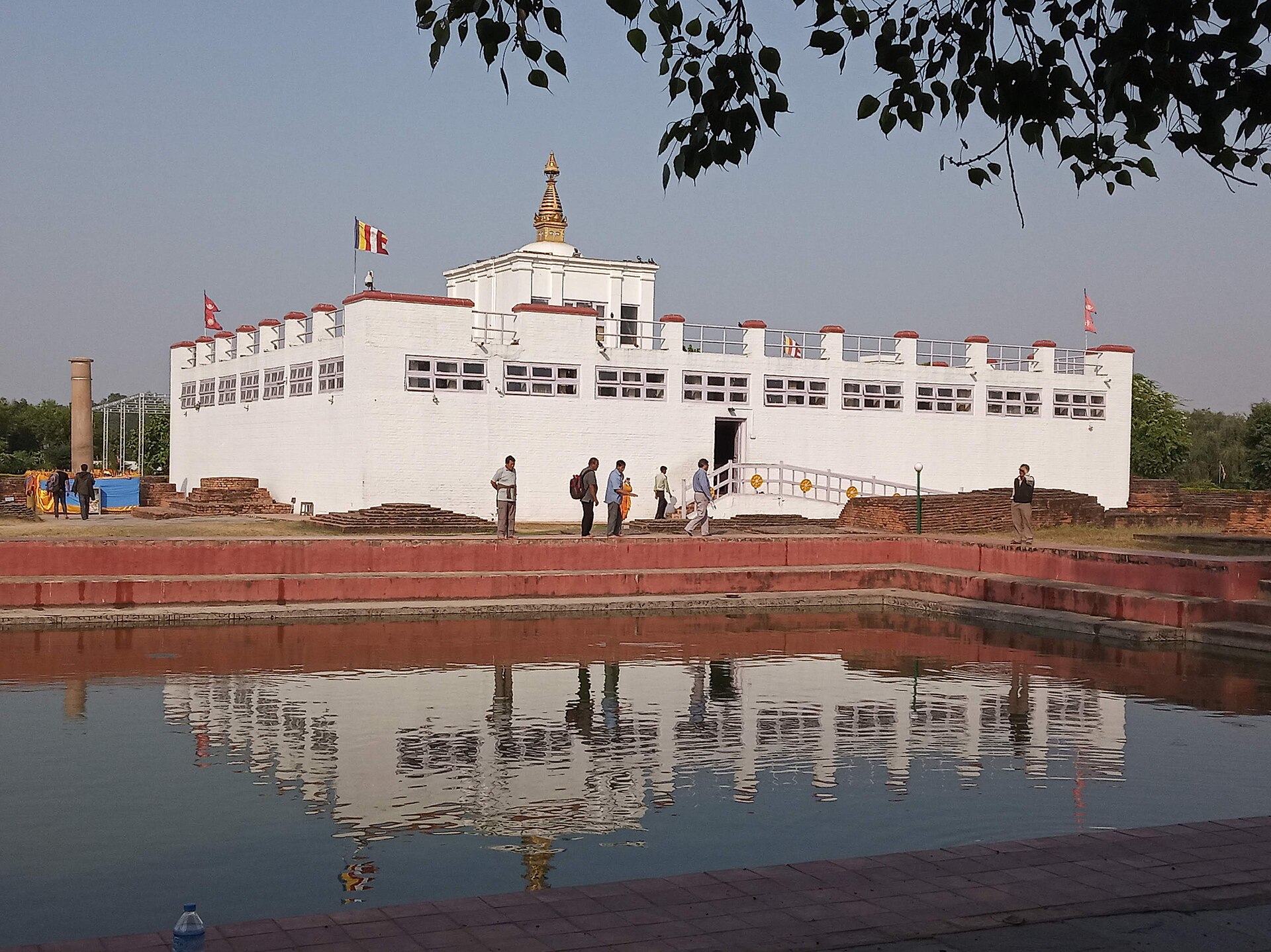
The Maya Devi Temple encloses the spot venerated for over two millennia as the birthplace of the Buddha. Inside lie the Marker Stone, believed to fix the exact nativity point, and the worn Nativity Sculpture showing Queen Maya Devi grasping a sal branch. Excavation revealed brick structures built in phases from the 3rd century BCE, laid over a still older shrine, arranged as fifteen box-like chambers in five east–west and three north–south rows around a circumambulatory path. The present whitewashed temple was rebuilt by the Lumbini Development Trust in 2003 to shelter these remains. It marks the first of the four great pilgrimage places: birth here at Lumbini, awakening at Bodh Gaya, first teaching at Sarnath, and parinirvāṇa at Kushinagar. The interior is a protected archaeological space; photography inside is generally restricted, so confirm on arrival before capturing.
भित्र फोटो खिच्न प्रतिबन्धित छ। फोटो खिच्नुअघि त्यहाँ पुगेर सोध्नुहोस्।
समयक्रममा
1896–1899
Rediscovery
Khadga Shamsher Rana and Anton Führer clear a mound crowned by a shrine to 'Rummini-dei', uncovering the Ashokan pillar and its inscription. P. C. Mukherji surveys and plans the site in 1899, recovering the main part of the Nativity Sculpture.
1933–1939
Reconstruction
Keshar Shumsher excavates the mound and rebuilds the Maya Devi Temple. The work was later criticised by Debala Mitra as unscientific, having damaged or destroyed structures exposed by earlier surveys.
1962–1985
Conservation
The Master Plan era. Kenzo Tange's plan for Lumbini is adopted, and systematic Department of Archaeology surveys begin in 1970–71.
1992–1997
Re-excavation
Renewed excavation exposes the phased brick structures beneath the temple. The Marker Stone is found in 1996, and Lumbini is inscribed on the UNESCO World Heritage List in 1997.
2003–हालसम्म
Present temple
The Maya Devi Temple is rebuilt by the Lumbini Development Trust to shelter the excavated remains and the Marker Stone.
स्रोतहरू
यस पृष्ठको हरेक भनाइ यीमध्ये कुनै एकमा आधारित छ। स्रोतसम्म पुग्न नसकिने तथ्य यो पृष्ठले बोक्दैन।